
There is increasing search interest in “DPDP certification in India”. However, the Digital Personal Data Protection Act does not provide a formal certification mechanism.
Next batch: 21–22 October 2026
Get DPDP certified in 2 days
Accredited DPDP Act 2023 & Rules 2025 course for DPOs and privacy teams. ₹16,500 + GST.
View course & dates WhatsApp us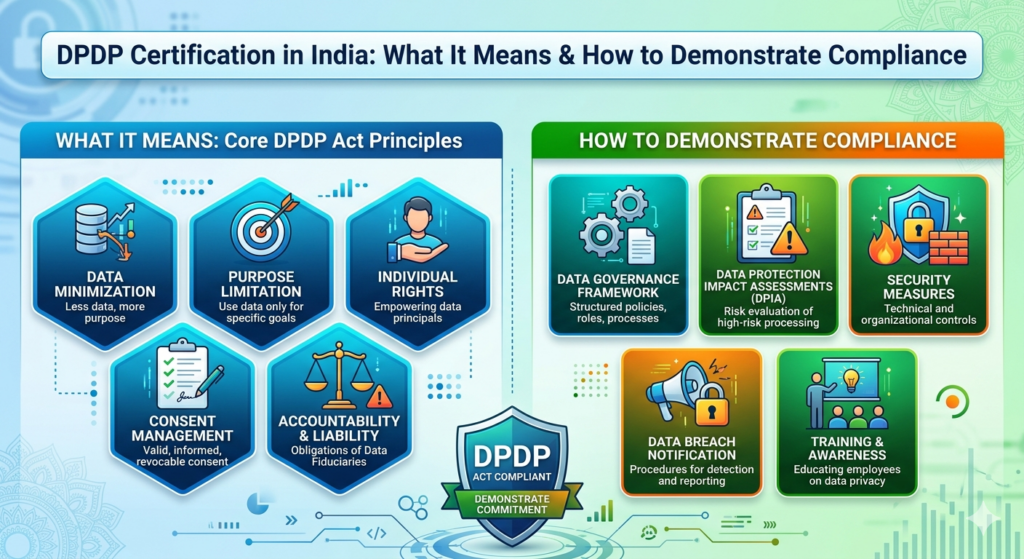
Organisations are not issued a government-backed DPDP certificate. Instead, they are expected to demonstrate compliance through controls, documentation and accountability frameworks.
practice, what is often referred to as “DPDP certification” is actually DPDP compliance readiness, audit preparedness and demonstrable governance.
Also see: DPDP Compliance in India — full framework
1. Is DPDP Certification Mandatory in India
No formal DPDP certification currently exists.
What DPDP requires instead:
• Compliance with consent, retention and rights obligations
• Ability to demonstrate lawful processing
• Breach notification capability
• Governance and accountability
Regulators will assess how compliance is implemented, not whether a certificate exists.
2. What Organisations Mean by “DPDP Certification”
In practice, organisations use “DPDP certification” to refer to:
• Internal compliance assessments
• Third-party DPDP audits
• Privacy framework alignment (e.g., ISO/IEC 27701)
• Readiness for regulatory inspection
The focus is on evidence, not certification
3. What Demonstrates DPDP Compliance (Audit Perspective)
From a regulatory and audit standpoint, organisations must demonstrate:
Consent Management
• Valid, recorded and withdrawable consent
Refer: Consent Management under DPDP
ta Retention and Deletion
• Purpose-based retention
• Legal mapping
• Evidence of deletion
(Refer: Data Retention under DPDP [link to Cluster 2])
Data Subject Rights
• Ability to respond to access, correction and erasure
• Defined workflows and timelines
(Refer: Data Subject Rights under DPDP [link to Cluster 4])
Vendor and Processor Controls
• Data Protection Agreements
• Contractual safeguards
• Vendor oversight
(Refer: Vendor Controls under DPDP [link to Cluster 5])
Breach Response
• Incident detection and classification
• Notification workflows
Governance
• Defined ownership
• Board-level visibility
• Risk monitoring
These collectively form the basis of DPDP compliance evaluation
4. Role of Significant Data Fiduciary (SDF) in Compliance
Certain organisations may be classified as Significant Data Fiduciaries based on:
• Volume and sensitivity of personal data
• Risk to individuals
• Scale of processing
Additional expectations:
• Appointment of Data Protection Officer (DPO)
• Periodic audits
• Enhanced governance
SDF classification increases the need for structured compliance frameworks
5. DPDP Compliance vs ISO Certification
Many organisations compare DPDP with ISO standards.
| Aspect | DPDP | ISO (e.g., ISO 27701) |
| Certification | Not available | Available |
| Nature | Law / regulation | Voluntary standard |
| Enforcement | Regulatory | Certification body |
| Focus | Legal compliance | Framework-based |
ISO certification can support DPDP readiness, but does not replace compliance
6. How to Achieve DPDP Compliance Readiness
Organisations should adopt a structured approach:
Step-based implementation:
• Gap assessment
• Data discovery and inventory
• Consent management framework
• Data retention policy
• Risk and SDF evaluation
• Vendor contract controls
• Data subject rights workflows
• Breach response framework
• Governance model
This aligns with a defensible DPDP compliance program
7. Evidence Required for DPDP Compliance
To demonstrate compliance, organisations must maintain:
• Consent logs
• Data inventories and flow maps
• Retention schedules and deletion evidence
• Vendor contracts and DPAs
• Incident logs
• Rights request records
• Policies and governance documentation
Documentation is the closest equivalent to “certification” under DPDP
8. Common Misconceptions about DPDP Certification
• “We need a DPDP certificate” → No such requirement
• “ISO certification equals DPDP compliance” → Not sufficient
• “Policy documentation is enough” → Implementation required
DPDP is enforced through accountability and evidence
9. Executive View — What Matters More than Certification
For leadership, the focus should shift from certification to:
• Compliance readiness
• Audit defensibility
• Risk reduction
• Regulatory preparedness
Organisations that build structured compliance frameworks are better positioned than those seeking certification labels.
FAQs — DPDP Certification and Compliance (SEO BOOST)
Is DPDP certification available in India?
No. There is no formal certification issued under the DPDP Act.
How can organisations prove DPDP compliance?
Through documented controls, audit trails, policies and operational frameworks.
Is ISO 27701 required for DPDP compliance?
No, but it can support privacy governance.
What is the alternative to DPDP certification?
Compliance assessments, audits and readiness programmes.
Also read
Next batch: 21–22 October 2026
Get DPDP certified in 2 days
Accredited DPDP Act 2023 & Rules 2025 course for DPOs and privacy teams. ₹16,500 + GST.
View course & dates WhatsApp us